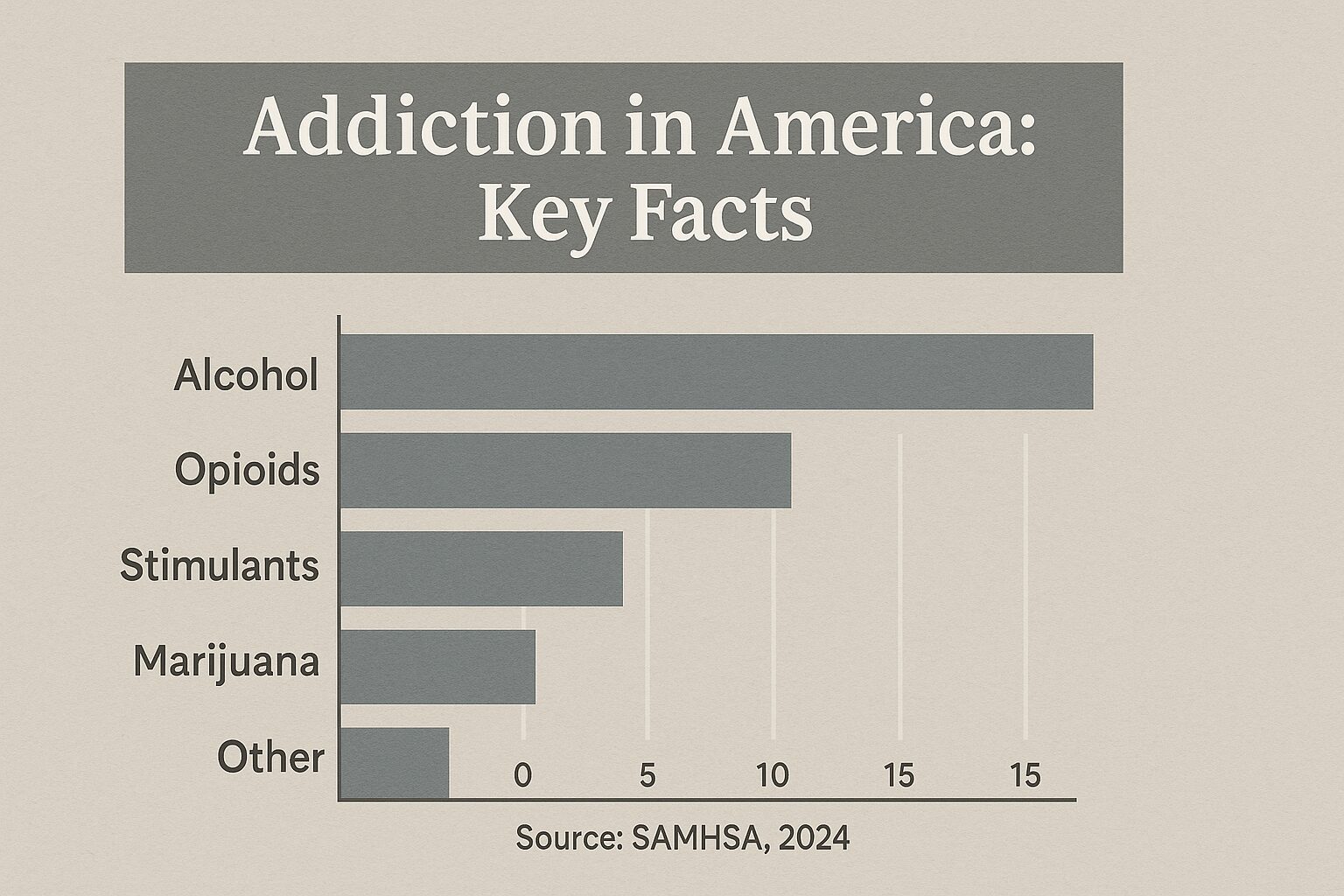
Addiction 101: A Clear-Eyed Guide to the Science, Signs & Path to Recovery
Addiction isn’t a character flaw or a lack of willpower. It’s a chronic—but treatable—brain condition that hijacks the reward circuitry designed to keep us alive. When that circuitry is flooded by mood-altering substances or behaviors, judgment, impulse control, and even survival instincts bend toward one goal: getting more. Understanding this process is the first step toward reversing it and reclaiming the life—and relationships—you deserve.
What Exactly Is Addiction?
The American Psychiatric Association defines substance use disorder as a pattern of problematic use leading to clinically significant impairment or distress. In plain English: the “want” becomes a “need,” even when it’s wrecking health, work, or love. That’s why the National Institute on Drug Abuse (NIDA) calls addiction “a chronic, relapsing disorder characterized by compulsive substance use despite harmful consequences.” National Institute on Drug Abuse
The Science Behind Addiction: How Substances Rewire the Brain
Drugs and alcohol over-activate the brain’s reward circuit, unleashing dopamine surges far beyond normal life pleasures. Over time, the brain compensates—producing less natural dopamine and pruning receptor sites—so the person feels flat without the substance and needs more to feel “normal.” Regions that govern judgment (prefrontal cortex) and stress response (amygdala) also change, reinforcing cravings and impulsivity. National Institute on Drug Abuse
Latest Statistics: Addiction in 2024
- 48.4 million Americans—16.8 % of those aged 12+—lived with a past-year substance use disorder (SUD) in 2024, according to SAMHSA’s newest National Survey on Drug Use and Health. SAMHSA
- Provisional CDC data show overdose deaths dropped nearly 24 % (to ~87,000) for the 12 months ending Sept 2024—encouraging, yet overdose remains the leading cause of death for adults 18-44. CDC
Risk Factors: Why Some People Are More Vulnerable
- Genetics: Up to 60 % of risk is hereditary, especially variations in dopamine-related genes.
- Early exposure: The earlier someone uses, the higher the lifetime risk.
- Mental-health disorders: Anxiety, depression, PTSD, and ADHD often intertwine with SUD.
- Trauma & stress: Adverse childhood experiences double or triple addiction odds.
- Environment & availability: Peer use, advertising, and easy access all raise risk.
Recognizing the Signs of Addiction
Behavioral
- Using more or longer than intended
- Failed attempts to cut back
- Neglecting work, school, or family roles
Physical
- Tolerance (needing more for the same effect)
- Withdrawal symptoms when stopping
- Unexplained weight loss or gain
Psychological
- Cravings dominate thoughts
- Mood swings, anxiety, or depression
- Denial or defensiveness when questioned
The Cycle of Addiction and Withdrawal
- Initial use – dopamine rush feels rewarding.
- Regular use – brain learns to anticipate the drug.
- Tolerance – larger doses required for the same high.
- Dependence – body adapts; stopping triggers withdrawal.
- Addiction – compulsion overrides logic.
- Relapse risk – stress or cues can reignite cravings even after abstinence.
Evidence-Based Paths to Recovery
| Approach | What It Does | Best For |
|---|---|---|
| Medications for Opioid Use Disorder (MOUD) e.g., buprenorphine, methadone | Stabilize brain chemistry, cut overdose risk | Opioid addiction |
| Medication-Assisted Treatment (MAT) for alcohol (naltrexone, acamprosate) | Reduce cravings, support abstinence | Alcohol use disorder |
| Cognitive Behavioral Therapy (CBT) | Reframes thought patterns driving use | Most SUDs |
| Motivational Interviewing (MI) | Strengthens internal motivation | Early-stage readiness |
| 12-Step & Mutual-Help Groups | Peer accountability and support | Ongoing recovery |
Combine treatments for the highest success rates; no single path fits everyone.
How Addiction Impacts Relationships—and How to Support a Loved One
Addiction erodes trust, strains finances, and reshapes family roles (the “rescuer,” the “scapegoat,” the “lost child”). Partners may feel they’re dating the substance, not the person. Support starts with setting compassionate boundaries, encouraging professional help, and safeguarding your own wellbeing—remember, you can offer a lifeline, not swim for them.
Finding Help: Trusted Resources
- SAMHSA National Helpline: 1-800-662-HELP (24/7, confidential)
- 988 Suicide & Crisis Lifeline: Call or text 988
- FindTreatment.gov – locator for nearby evidence-based programs
- NIDA Treatment Directory – research-backed providers
Frequently Asked Questions
Why can’t my loved one “just stop”?
Addiction alters brain circuits that control judgment and impulse. Willpower alone can’t override those changes; medical and psychological support are key.
Is relapse a sign treatment failed?
No. Like other chronic illnesses, relapse signals treatment needs adjusting, not abandoning. It can be part of long-term recovery.
Do all addictive drugs affect the brain the same way?
They share a dopamine reward path but differ in how they disrupt neurotransmitters; opioids mimic endorphins, stimulants flood dopamine, alcohol depresses GABA.
Is medication-assisted treatment simply “trading one drug for another”?
Evidence shows MAT normalizes brain chemistry without a euphoric high, doubling or tripling recovery rates and cutting overdose deaths.
How long does withdrawal last?
Acute symptoms range from days (alcohol, stimulants) to weeks (opioids). Post-acute withdrawal—mood swings, sleep issues—can linger months but improves with support.
Addiction reshapes brains, but not destinies. With science-backed care, supportive relationships, and communities like SoberSoulMates, people move from surviving to thriving—proof that the opposite of addiction isn’t simply abstinence; it’s connection. Take the next step toward that connection today.
External Links
- NIDA – “Drugs, Brains, and Behavior” (https://nida.nih.gov/publications/drugs-brains-behavior-science-addiction)
- CDC Overdose Prevention (https://www.cdc.gov/overdose)
- SAMHSA 2024 NSDUH Highlights (https://www.samhsa.gov/data)
